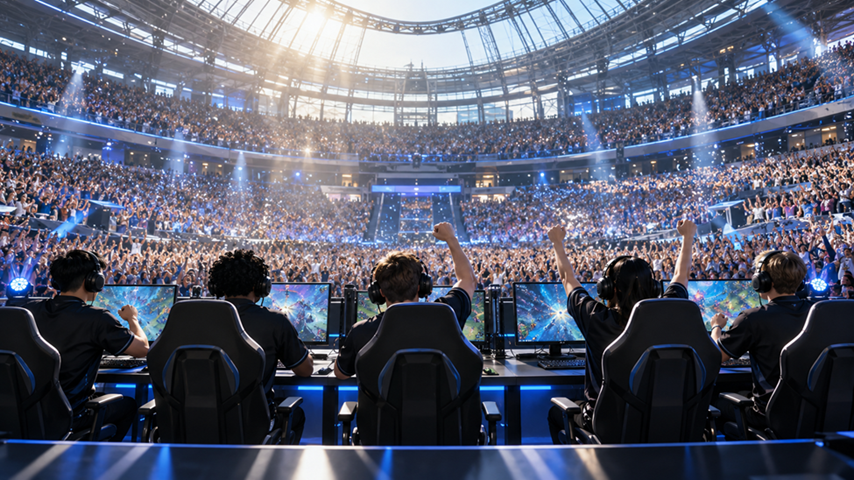
Two decades ago, competitive gaming meant a few dozen players in a rented hall and a modest cash prize. Today it fills arenas, streams to hundreds of millions of people and supports a full professional ecosystem. The story of esports is really the story of how play became a spectator sport.
From Basement Tournaments to a Global Stage
Esports has grown into a major entertainment industry, with leagues, broadcasters, sponsors and star athletes. Fans follow teams, watch streams and discuss results long after a match ends, creating opportunities for digital entertainment brands to connect with that audience. For 1 King, the relevant connection is this wider fan culture, where attention extends beyond tournaments to the platforms people explore between matches. According to Newzoo and Statista estimates, the global esports audience reached roughly 640.8 million in 2025. The Esports World Cup reported 850 million viewers and 440 million hours watched in 2026, with a record prize pool of 75 million dollars and more than 2,000 players from over 100 nationalities.
That said, mobile titles are now among the most-watched esports. Mobile Legends: Bang Bang reached a peak of about 5.68 million concurrent viewers during its M7 World Championship, a number that rivals many traditional sporting events.
Why the Growth Keeps Going
Several forces explain why this hobby became an industry:
- Free-to-play access that lets anyone try the same game the professionals play.
- Streaming platforms that turn every match into a shared, social experience.
- Smartphones, which brought competitive gaming to regions without expensive PCs.
- Professional structures such as salaries, coaching and academy systems.
- Big prize pools and club investment that create real career paths.
Taken together, these factors turned a niche pastime into a recognised profession with a global fan base.
Younger audiences in particular treat esports as a natural part of sports culture rather than a curiosity.
Türkiye’s Place in the Picture
Türkiye is one of the most active gaming markets in the region, with major football clubs running their own esports branches and Turkish organisations competing in titles such as Counter-Strike 2, Valorant and League of Legends. Market research firm Newzoo publishes regular reports on audience, revenue and player trends that show how fast the sector is moving. For young Turkish players, the lesson is that talent is only part of the story: communication, discipline and a healthy balance with school or work are what keep a career going. As infrastructure improves and local tournaments multiply, the next generation of Turkish esports stars may well come from a gaming room in an ordinary neighbourhood.
About the Author