
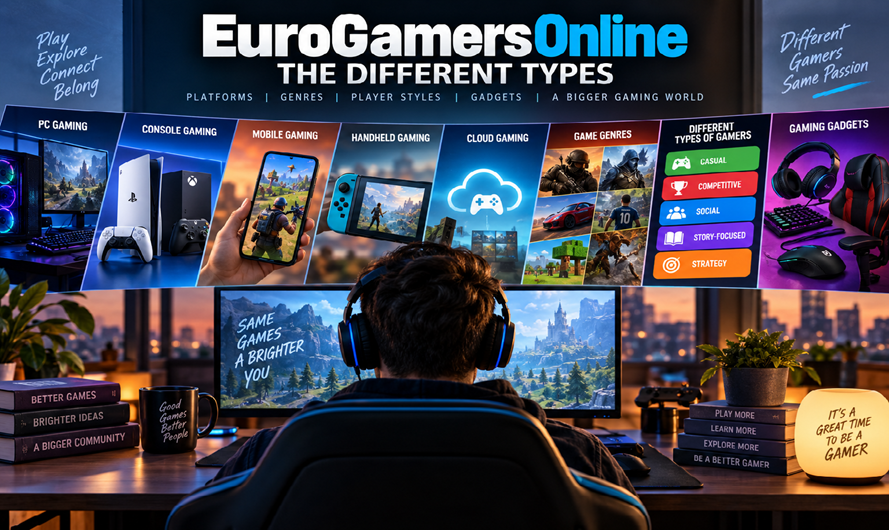
EuroGamersOnline the Different Types
Gaming has never been limited to one device, one genre, or one kind of player.
Some people spend hours building a gaming PC and fine-tuning every setting. Others prefer the simplicity of a console, the convenience of a smartphone, or the portability of a handheld system. Then there are players who care less about hardware and more about the game itself.
That variety helps explain the interest behind the search term “eurogamersonline the different types.”
The phrase isn’t an official gaming classification. Instead, it can describe several related ideas, including the types of content covered by EuroGamersOnline, different gaming platforms, popular game genres, and the many ways people approach gaming.
Understanding those distinctions makes the broader gaming landscape much easier to navigate.
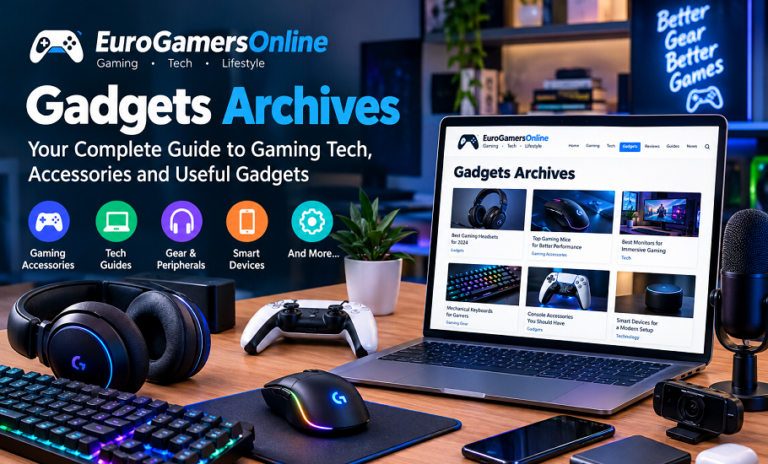
EuroGamersOnline currently focuses on areas such as console gaming, PC gaming, and gaming gadgets. Its coverage also includes gaming news, hardware topics, guides, and other industry-related subjects.
Meanwhile, the wider gaming audience continues to grow and diversify. The Entertainment Software Association reported in 2026 that 212.3 million Americans play video games each week. The average U.S. player is 37 years old.
So, what exactly are the different types?
The easiest way to understand them is to look at three things: where people play, what they play, and how they play.
What Does “EuroGamersOnline the Different Types” Mean?
There isn’t a formal industry definition for EuroGamersOnline the different types.
The term is better viewed as a broad search concept. It can point readers toward different categories of gaming content and different ways of experiencing games.
For practical purposes, the topic can be divided into three layers:
- Gaming platforms: PC, console, mobile, handheld, and cloud gaming
- Game genres: RPGs, shooters, strategy, simulation, sports, racing, puzzle, and more
- Player styles: casual, competitive, social, story-focused, strategic, and other play styles
These categories often overlap.
A player might enjoy competitive shooters on a PC but spend weekends playing a story-driven RPG on a console. Another gamer may use a phone during short breaks and a handheld system while traveling.
That’s why there isn’t one universal definition of a “type” of gamer.
The official EuroGamersOnline website centers much of its coverage on PC gaming, console gaming, and gadgets, making those three areas a useful starting point.
The Main Types of EuroGamersOnline Gaming Content
PC Gaming
PC gaming appeals to players who want control over their hardware and software experience.
Unlike a fixed console, a gaming PC can be configured and upgraded around individual preferences. Players can choose their graphics hardware, processor, storage, memory, monitor, keyboard, mouse, and other components.
That flexibility makes PCs suitable for a remarkably broad range of games.
Competitive shooters, strategy titles, simulations, RPGs, indie games, and demanding AAA releases can all find a home on the platform.
PC gaming does come with a learning curve. Drivers, graphics settings, hardware compatibility, upgrades, and troubleshooting can sometimes become part of the experience.
For enthusiasts, though, that technical control is often part of the appeal.
Console Gaming
Console gaming takes a different approach.
Instead of building and maintaining a system, players generally buy a dedicated console, connect it to a display, install their games, and start playing.
That simplicity remains one of the biggest reasons consoles are popular.
Console players can choose from a wide range of experiences, including:
- Single-player adventures
- Competitive multiplayer
- Sports games
- Racing
- Action titles
- Family-friendly games
- Local multiplayer
- Story-driven experiences
EuroGamersOnline has a dedicated console gaming section covering games, accessories, hardware topics, and related experiences.
For someone who wants straightforward living-room gaming without worrying about individual PC components, a console can be an excellent fit.
Gaming Gadgets and Accessories
The gaming experience doesn’t stop at the primary device.
The right accessories can improve comfort, communication, control, and overall usability.
Common gaming accessories include:
- Gaming headsets
- Mechanical keyboards
- Gaming mice
- Controllers
- External storage
- Charging docks
- Microphones
- Racing wheels
- Monitor arms
- Gaming chairs
- Portable gaming accessories
The best accessory isn’t necessarily the most expensive one.
A competitive multiplayer player may benefit from a responsive mouse or quality headset. Someone who spends hours playing RPGs may care more about comfort and audio quality. A racing enthusiast might get far more value from a wheel and pedal setup.
The practical approach is simple: identify the problem first, then buy the equipment that solves it.
Different Types of Gamers
Gaming platforms tell only part of the story.
Players themselves have different priorities, habits, and expectations. Those differences create another useful way to understand eurogamersonline the different types.
Casual Gamers
Casual gamers generally play for entertainment and relaxation rather than competition.
They may play for 15 minutes one day and several hours on another. Their game choices often include accessible titles such as:
- Puzzle games
- Mobile games
- Simulation games
- Sports games
- Casual multiplayer
- Easy-to-learn strategy games
Calling someone a casual gamer doesn’t say anything about their skill level.
It describes their relationship with gaming. A highly skilled player can still be a casual gamer if gaming isn’t a major part of their daily routine.
Competitive Gamers
Competitive gamers approach games with a stronger focus on performance.
They may practice mechanics, study maps, analyze opponents, learn team strategies, or spend time improving their ranking.
Competitive gaming can include:
- Ranked multiplayer
- Esports
- Tactical shooters
- Fighting games
- MOBAs
- Competitive sports games
- Real-time strategy
For these players, technical details can matter.
Input latency, frame rate, display refresh rate, mouse sensitivity, controller performance, and network stability can all affect the experience.
The difference between a casual and competitive setup isn’t always the hardware itself. It’s how much the player depends on precision and consistency.
Social and Cooperative Gamers
For some players, gaming is primarily a social activity.
They play because their friends are online. Cooperative games, party games, online communities, and team-based experiences can turn gaming into a regular social routine.
That behavior is widespread.
The ESA’s 2025 research found that 89% of players ages 8 to 90 had played video games online, while 55% played with others every week.
For this group, voice chat, matchmaking, cross-platform support, and a reliable internet connection can matter as much as graphics quality.
Story-Focused Gamers
Story-focused gamers tend to care about characters, world-building, exploration, and narrative choices.
They may gravitate toward:
- RPGs
- Action-adventure games
- Narrative adventures
- Interactive dramas
- Open-world games
Graphics can enhance these experiences, but they aren’t everything.
Strong writing, believable characters, meaningful decisions, and an interesting world often keep players engaged long after the novelty of impressive visuals fades.
Strategy Gamers
Strategy games reward planning rather than quick reflexes.
Players may need to manage resources, build economies, position units, make tactical decisions, or plan several moves ahead.
Popular subcategories include:
- Turn-based strategy
- Real-time strategy
- Tactical games
- City builders
- Management simulations
- Grand strategy
For players who enjoy solving complicated problems and thinking several steps ahead, this can be one of the most rewarding gaming categories.
Major Game Genres Explained
Another way to understand the different types of gaming is through genres.
| Game Type | Best For | Typical Experience |
|---|---|---|
| RPG | Story and character development | Quests, exploration, progression |
| Shooter | Action and competition | Fast combat and aiming |
| Strategy | Planning and decision-making | Tactical or strategic challenges |
| Simulation | Realistic or creative play | Building, managing, experimenting |
| Sports | Sports fans | Matches, seasons, team management |
| Racing | Speed enthusiasts | Cars, tracks, competition |
| Puzzle | Problem-solvers | Logic and pattern recognition |
| Adventure | Exploration and storytelling | Discovery and narrative |
| Fighting | Competitive players | One-on-one combat |
| MMO | Social and long-term players | Persistent online worlds |
These categories aren’t rigid.
Modern games frequently combine several genres. An RPG may include shooter mechanics. A simulation can include strategy systems. An open-world adventure may feature role-playing, crafting, combat, and social elements.
That blending gives players more ways to find experiences that match their interests.
Gaming Platforms: Which Type Fits You?
Choosing a platform is often easier when you start with your gaming habits instead of hardware specifications.
PC Gaming
Best for: customization, competitive play, strategy, simulation, and players who want extensive control.
Pros:
- Highly customizable
- Upgradeable hardware
- Adjustable graphics settings
- Strong support for many genres
- Broad software ecosystem
Cons:
- More complicated setup
- Hardware costs can vary significantly
- Troubleshooting may require technical knowledge
Console Gaming
Best for: straightforward home gaming and living-room entertainment.
Pros:
- Easy setup
- Consistent hardware
- Strong controller support
- Dedicated gaming ecosystem
Cons:
- Limited hardware customization
- Fewer upgrade options
- Some games remain platform-specific
Mobile Gaming
Best for: convenience and short gaming sessions.
Mobile gaming has become an important part of the overall gaming market. In Europe, 71% of players used smartphones or tablets for gaming according to the latest European key-facts data.
Pros:
- Easy to access
- Convenient for short sessions
- No dedicated gaming hardware required
- Huge selection of games
Cons:
- Touch controls aren’t ideal for every genre
- Performance varies by device
- Monetization systems differ between games
Handheld Gaming
Handheld systems bring dedicated gaming controls into a portable format.
Valve describes Steam Deck as a portable PC gaming device designed to provide a console-like experience.
Best for: travelers, commuters, and players who want dedicated gaming away from a desk.
Portability is the biggest advantage. Battery life, weight, screen size, and performance are the main trade-offs to consider.
Cloud Gaming
Cloud gaming changes the traditional relationship between hardware and games.
Instead of rendering everything locally, compatible services process games remotely and stream the experience to the player’s device.
That can reduce the need for powerful local hardware.
However, the internet connection becomes much more important. Latency, stability, bandwidth, and network congestion can all influence the experience.
EuroGamersOnline the Different Types: Quick Comparison
| Category | Best Match | Main Advantage | Main Challenge |
|---|---|---|---|
| PC gaming | Enthusiasts | Flexibility | Complexity |
| Console gaming | Convenience-focused players | Simple setup | Less customization |
| Mobile gaming | Casual players | Accessibility | Smaller controls |
| Handheld gaming | Travelers | Portability | Battery and performance limits |
| Competitive gaming | Skill-focused players | Challenge | Time commitment |
| Casual gaming | Relaxed players | Low pressure | Less depth in some titles |
| Story gaming | Narrative fans | Immersion | Longer playtime |
| Strategy gaming | Analytical players | Mental challenge | Learning curve |
| Social gaming | Community-focused players | Connection | Depends on other players |
How to Choose the Right Gaming Type
You don’t need to choose one category and stick with it forever.
Instead, consider how you actually spend your gaming time.
Consider Your Available Time
A player with 20 minutes to spare may prefer a mobile game or a quick multiplayer match.
Someone with several uninterrupted hours may have more interest in RPGs, strategy games, simulations, or long-form adventures.
Decide Whether You Want Competition
If you enjoy improving your performance and testing yourself against other players, competitive games may be a natural fit.
If gaming is how you unwind, a relaxed single-player or simulation experience may make more sense.
Think About Social Interaction
Do you usually play alone, or do you wait for friends to come online?
If social interaction drives your gaming routine, look for cooperative and multiplayer games with active communities.
Solo players may prefer games that provide a strong single-player experience without depending on other people.
Set a Realistic Budget
Your budget should influence your platform decision.
A smartphone you already own may be enough for casual gaming. A dedicated PC setup offers considerably more customization but can require a larger initial investment.
Don’t buy high-end hardware simply because it has impressive specifications.
Start with the games you want to play.
Identify What You Value Most
Ask yourself one simple question:
Expert Tips for Getting More From EuroGamersOnline
1. Choose Your Games Before Your Hardware
This is one of the most useful rules for avoiding unnecessary spending.
Make a list of the games you actually want to play. Check their system requirements. Then choose hardware that meets those needs.
A powerful machine is wasted money if your favorite games don’t require it.
2. Look Beyond Marketing Numbers
A specification sheet doesn’t tell the entire story.
Frame rate, resolution, latency, refresh rate, image quality, controller response, and software optimization all affect real-world performance.
Consider the complete experience rather than chasing the biggest number.
3. Check Accessory Compatibility
Before buying a headset, controller, microphone, or other accessory, confirm that it works with your platform.
Also check connection types, required software, wireless compatibility, and supported features.
4. Protect Your Gaming Accounts
Use unique passwords and enable two-factor authentication whenever a service offers it.
Be cautious with unofficial downloads, suspicious links, cheat software, and third-party tools that request unnecessary account access.
Account security is easy to overlook until something goes wrong.
5. Build a Comfortable Setup
Comfort becomes increasingly important during longer gaming sessions.
Pay attention to your chair, monitor position, desk height, controller placement, and general posture.
A more expensive setup isn’t automatically a more comfortable one. Good positioning often makes a bigger difference.
6. Pay Attention to Ratings and Accessibility
Game ratings help players and families understand the type of content a title contains.
Accessibility information can be equally useful.
The ESA’s Accessible Games Initiative uses accessibility tags to give players clearer information about available features.
Checking those details before purchasing can save time and prevent unpleasant surprises.
Why the Different Types of Gaming Matter
The biggest mistake is assuming that every gamer wants the same experience.
They don’t.
Gaming audiences span different ages, lifestyles, budgets, skill levels, and interests. European data from Video Games Europe shows that 54% of people ages 6–64 play video games, while adults make up 75% of European players. The average European player is 31.
The U.S. market shows the same kind of diversity. More than 212 million Americans play games every week, according to the ESA’s 2026 data.
That diversity explains why the industry supports so many platforms, genres, accessories, communities, and play styles.
The better question isn’t, “What’s the best type of gaming?”
It’s “What type of gaming fits the way I want to play?”
Pros and Cons of Exploring Different Gaming Types
Pros
- You can discover genres you wouldn’t normally try.
- Platform decisions become easier.
- You can avoid buying unnecessary hardware.
- Your gaming setup can better match your habits.
- You can find games that fit your schedule.
- Recommendations become more useful.
- Exploring different genres can broaden your gaming experience.
Cons
- The number of choices can feel overwhelming.
- Some genres have significant learning curves.
- Building multiple gaming setups can become expensive.
- Multiplayer games depend on other players and network quality.
- Some games demand substantial time commitments.
The answer isn’t to try everything at once.
Experiment gradually. Try a new genre, platform, or multiplayer experience when there’s a genuine reason to do so.
You may discover that a game outside your usual comfort zone becomes a favorite.
(FAQs) About EuroGamersOnline the Different Type
1. What does EuroGamersOnline the different types mean?
EuroGamersOnline the different types is best understood as a broad search concept covering different gaming platforms, genres, player styles, and gaming-related content associated with EuroGamersOnline.
2. Is EuroGamersOnline the different types an official gaming classification?
No. It isn’t a formal classification used by the gaming industry. The phrase is better treated as a way of describing different aspects of gaming.
3. What are the main EuroGamersOnline categories?
EuroGamersOnline primarily covers areas such as PC gaming, console gaming, and gaming gadgets. Its broader content also includes gaming news, guides, hardware topics, and related subjects.
4. What is a casual gamer?
A casual gamer generally plays for entertainment or relaxation without making gaming a major daily commitment. Casual gaming doesn’t necessarily mean low skill.
5. What type of gaming is best for competitive players?
Competitive players should consider games that reward precision and improvement. They should also pay attention to input latency, frame rate, refresh rate, network performance, and controller or mouse quality.
6. Is PC gaming better than console gaming?
Neither platform is universally better. PCs offer greater customization and upgradeability, while consoles provide simpler setup and consistent hardware.
7. What gaming platform is best for beginners?
There isn’t one answer for everyone. Consoles and mobile devices can offer accessible entry points, while beginner-friendly PC games can also provide an excellent introduction.
8. Is mobile gaming considered gaming?
Yes. Mobile gaming is a major part of the industry. European research shows that smartphones and tablets are widely used for gaming.
9. Can one person fit several gamer types?
Absolutely.
Someone can be a casual player during the week, a competitive player on weekends, and a story-focused gamer when a major RPG launches.
These categories describe preferences, not permanent identities.
10. How should I choose my next game?
Start with your available time, favorite genres, preferred level of challenge, platform, budget, and whether you want to play alone or with others.
Conclusion
EuroGamersOnline the different types isn’t about finding one definitive category of gaming.
It’s about understanding the many ways people play.
PC gaming gives enthusiasts control and customization. Consoles offer convenience. Mobile gaming makes play accessible almost anywhere. Handheld systems add portability, while cloud gaming changes how much local hardware a player needs.
The games themselves are just as varied.
Some players want intense competition. Others want a great story, thoughtful strategy, social interaction, creative freedom, or a relaxing way to spend an evening.
Many people move between several of these categories without thinking about it.
That’s one of gaming’s greatest strengths.
So, if you’re researching eurogamersonline the different types, don’t focus on finding a single “best” option. Look at the bigger picture. Consider your budget, schedule, preferred genres, favorite platform, and the kind of experience you want when you sit down to play.
Once those factors are clear, choosing the right games, hardware, and accessories becomes much easier.
About the Author


2 thoughts on “EuroGamersOnline the Different Types: A Complete Guide to Gaming Platforms 2026”